
UK Visa Applications May 2026: Work, Study and Family Visa Trends Explained
What do the latest UK visa application figures actually mean? The Home Office has published its monthly entry clearance visa application statistics for May 2026. In plain English, this tells us how many people applied from outside the UK for visas to come here for work, study or family reasons.
The headline is simple: several major visa routes are quieter than they were a year ago, especially Health and Care Worker visas and Skilled Worker visas. Family visa applications are also slightly down. Study visa applications are broadly lower for main applicants, while student dependant applications remain far below the level seen before the January 2024 rule changes.
This article explains the figures in normal language, why they matter, and what applicants and sponsors should take from them.
Read the original GOV.UK statistics here.
The figures are useful, but they are not the final numbers
The first thing to understand is that this is a monthly statistics release, not a full final report. GOV.UK says the figures are “provisional”. It also says there may be some missing or incomplete records for 28 to 31 May 2026, although the Home Office’s initial assessment was that this should have a “very minimal effect” on the headline trends.
So the figures are useful for seeing direction of travel, but they should not be treated as perfect final numbers. The final figures are expected in the quarterly Home Office immigration statistics.
Work visas: fewer applications than before
The biggest change is in work-related visas.
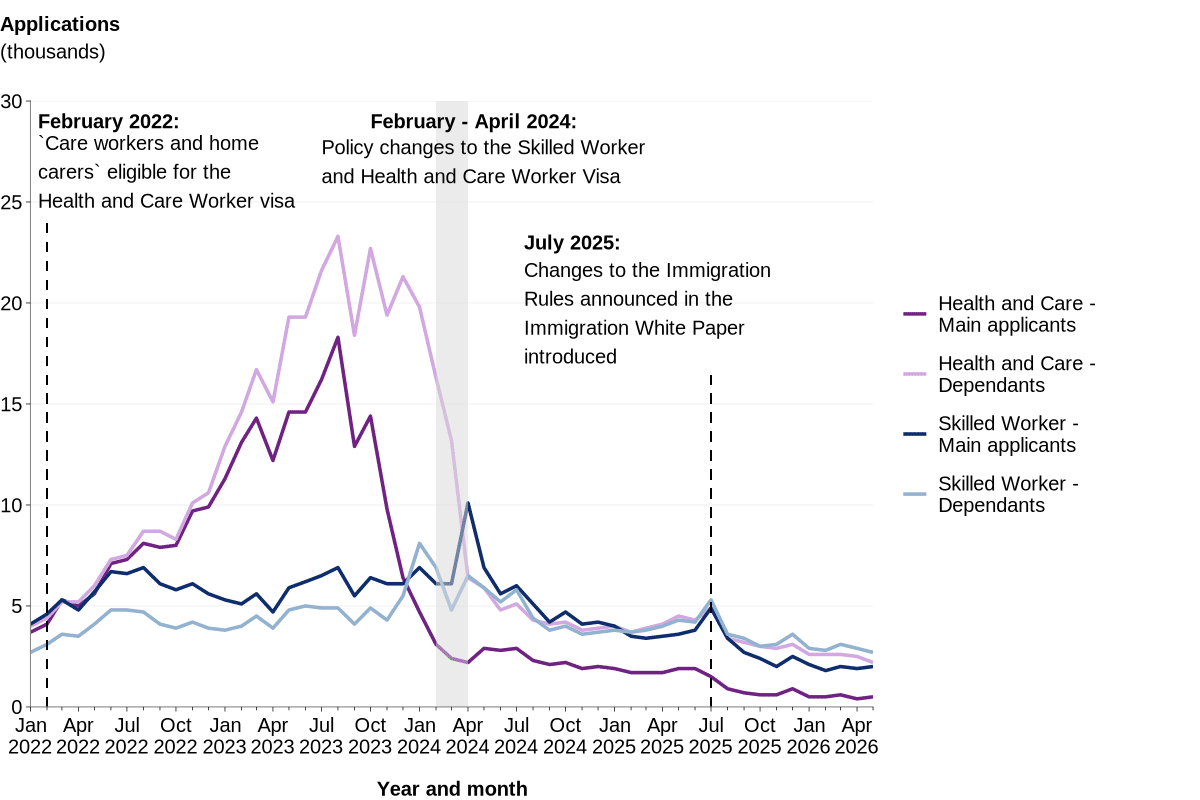
For the year ending May 2026, there were 9,600 Health and Care Worker visa applications from main applicants. That was a 62% fall compared with the year ending May 2025. It was also far below the earlier peak seen in the year ending November 2023.
There were also 31,500 Skilled Worker visa applications from main applicants in the year ending May 2026. That was a 39% decrease compared with the previous year.
In everyday terms: fewer people are applying from overseas to work in the UK through these routes. That does not mean the routes are closed. It means the system has become stricter, more expensive and more selective, particularly after rule changes and increased compliance activity.
Why have Health and Care Worker applications fallen so much?
The fall in Health and Care Worker applications is not random. The Home Office links earlier falls to more scrutiny of employers in the health and social care sector and compliance action against sponsors who failed to meet their duties.
More recent falls followed policy changes, including restrictions affecting care worker recruitment from overseas and restrictions on dependants.
For care providers, this means sponsor compliance is no longer a background issue. If a business sponsors workers, it must be able to show proper records, genuine vacancies, correct pay, lawful recruitment and ongoing compliance with sponsor duties.
For workers, it means the job offer, sponsor licence and Certificate of Sponsorship need to be checked carefully before relying on the route.
Skilled Worker visas: the bar is now higher
The May 2026 statistics should be read alongside major Skilled Worker changes that took effect on 22 July 2025.
The Home Office says the job skill level requirement was raised. In general, Skilled Worker jobs now need to be at RQF level 6 or above, unless an exception applies through routes such as the Immigration Salary List or Temporary Shortage List.
The general Skilled Worker salary threshold also increased from £38,700 to £41,700. There are exceptions and route-specific rules, but the broad direction is clear: many lower-paid or lower-skilled roles that used to fit more easily may now be harder, or impossible, to sponsor.
For applicants, this means it is not enough to have an employer who wants to hire you. The role, salary, occupation code, sponsor licence, Certificate of Sponsorship and English language requirement all need to fit the current rules.
Student visas: main applicants are slightly down
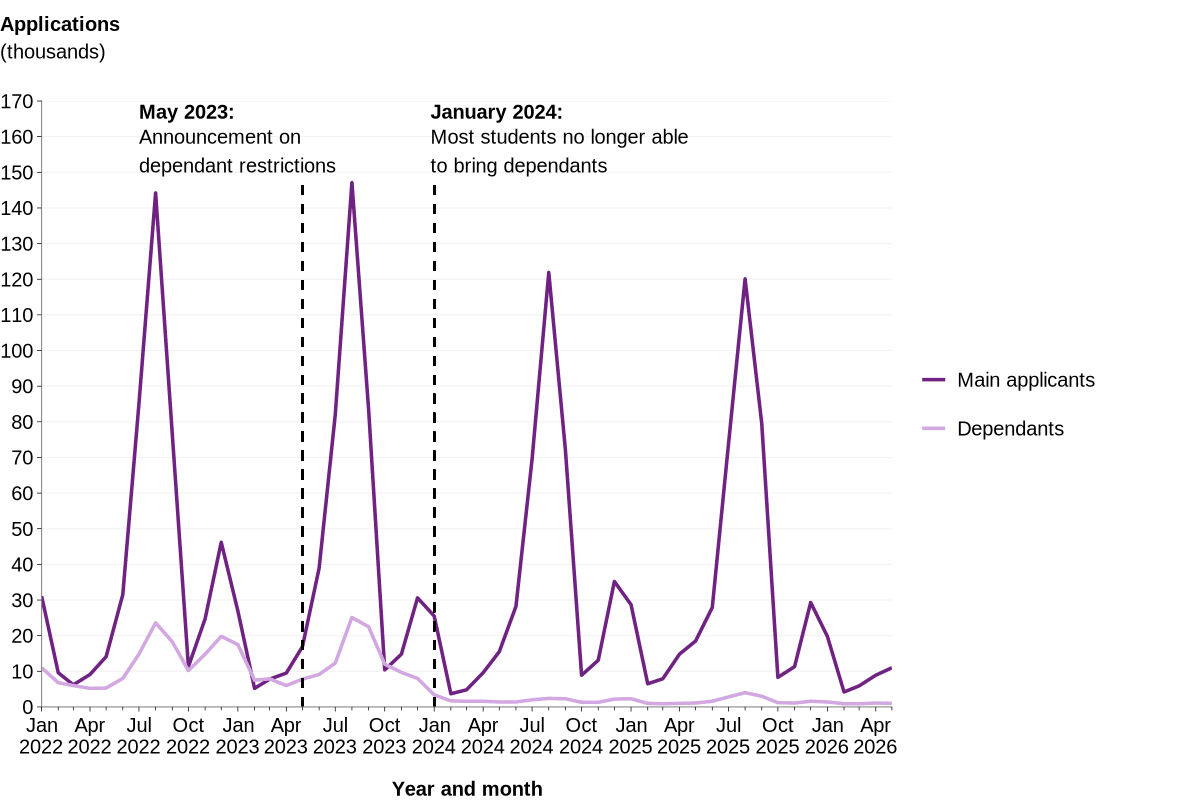
Sponsored study visa applications follow the academic year. They usually rise before courses start, especially around August, with a smaller peak around December.
For the year ending May 2026, there were 399,700 sponsored study applications from main applicants. That was 6% lower than the year ending May 2025.
Student dependant applications were 20,600 in the year ending May 2026. That was higher than the previous year, but still very low compared with the period before the January 2024 changes. Most students can no longer bring dependants unless they fall into a permitted category.
For students, the practical message is this: course choice, sponsor status, financial evidence, academic progression and dependant eligibility all matter. A weak or rushed application can still be refused even if overall student numbers remain high.
Family visas: applications are slightly down
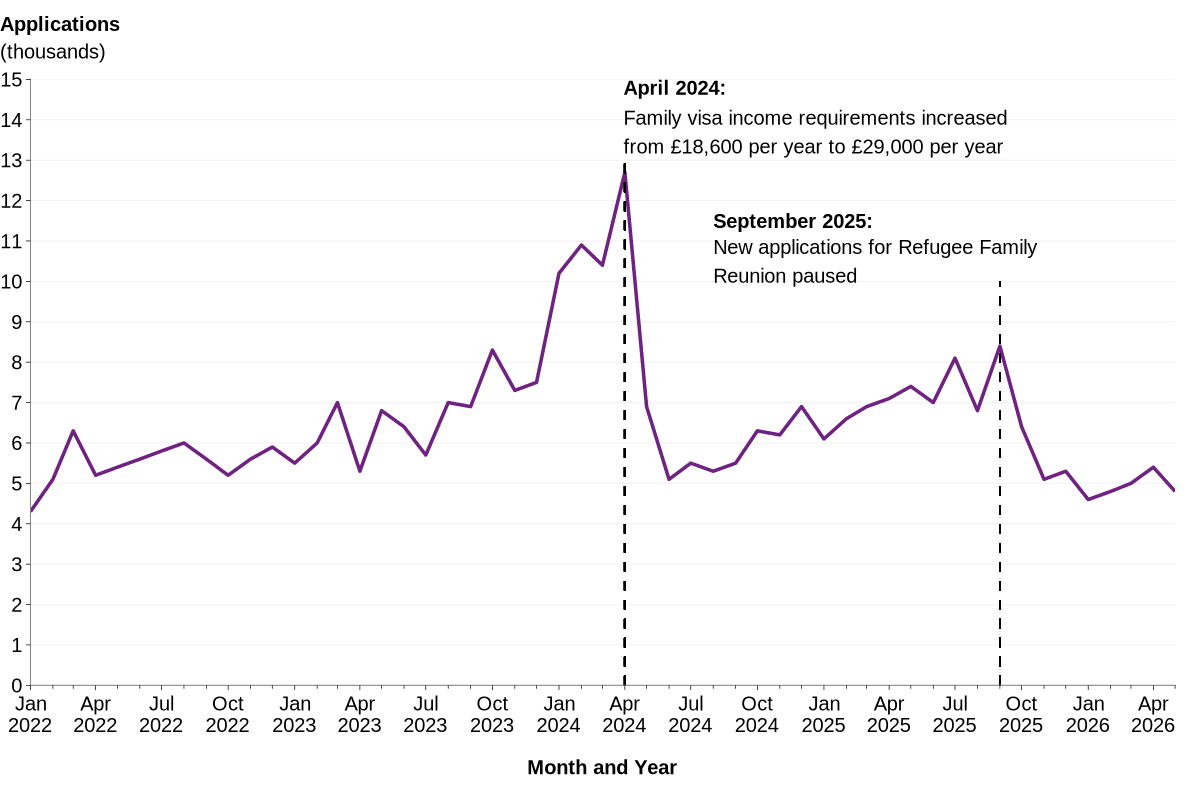
Family visa applications were also down slightly.
There were 71,700 Family visa applications in the year ending May 2026. This was 4% fewer than the year ending May 2025, when there were 74,900.
The Home Office also notes that family visa applications have fallen since September 2025, following the pause to new Refugee Family Reunion applications. Monthly family visa applications fell from 8,400 in September 2025 to 4,800 in May 2026.
For spouses, partners, children and parents, the important point is that Family visa statistics do not remove the need to meet the specific Immigration Rules. The Home Office will still look carefully at relationship evidence, income, accommodation, English language, immigration history and suitability issues.
Seasonal Worker and Youth Mobility visas
Temporary work routes follow seasonal patterns. That means the numbers rise and fall during the year because of the type of work or travel involved.
For the year ending May 2026:
- Youth Mobility Scheme applications: 21,000, which was 5% lower than the previous year.
- Seasonal Worker applications: 41,600, which was 6% higher than the previous year.
People using these routes generally cannot bring dependants. These routes are also not the same as long-term settlement routes, so applicants should understand what the visa does and does not allow before applying.
What does this mean for ordinary applicants?
The numbers show a tighter UK immigration system. Some routes are still heavily used, but the direction is stricter control, higher thresholds and more scrutiny.
If you are applying for a UK visa, the lesson is not to assume that because other people have applied successfully, your application will be straightforward. The Home Office decides individual applications on the evidence and the rules in force at the date of decision.
Common problems include:
- wrong visa route;
- salary or job code problems;
- weak relationship evidence;
- missing financial documents;
- unclear immigration history;
- incorrect dependant assumptions;
- poor sponsor compliance;
- documents that do not match the Immigration Rules.
What does this mean for employers and sponsors?
For employers, the statistics are a warning that sponsor compliance is central. The Home Office has already linked falls in Health and Care Worker applications to scrutiny and compliance activity.
Sponsors should be able to show that:
- the sponsored role is genuine;
- the correct occupation code has been used;
- salary and working hours are lawful and accurately recorded;
- right to work checks are properly completed;
- worker addresses and contact details are kept up to date;
- reporting duties are met on time;
- the business is ready for a Home Office compliance visit.
A sponsor licence is not just permission to recruit. It is an ongoing compliance responsibility.
What should you do before applying?
Before submitting a UK visa application, take time to check the rules carefully. A good application is not just a form and uploaded documents. It is a structured evidence package that answers the Home Office’s likely concerns before they become refusal reasons.
In practical terms, you should check:
- whether you are applying under the correct visa route;
- whether the current Immigration Rules still allow your plan;
- whether you meet the financial, English language and suitability requirements;
- whether your documents are complete, consistent and current;
- whether there are any previous immigration problems that need to be addressed;
- whether a dependant can lawfully apply with you;
- whether your sponsor, employer, university or family member meets their part of the requirements.
How legal advice can help
Legal advice cannot guarantee a visa. It can, however, help you avoid preventable mistakes.
A careful immigration adviser can check the route, identify risk points, review evidence, prepare legal representations where needed and make sure the application is presented clearly. This is especially important where the case involves refusal history, overstaying, complex finances, dependants, sponsor issues, criminality, previous deception allegations or urgent travel plans.
If you are unsure whether you qualify, or if your case is not straightforward, you can book a consultation here: Book an immigration consultation.
Frequently asked questions
Are UK visa applications going down?
Some categories are down. The May 2026 Home Office statistics show significant falls in Health and Care Worker and Skilled Worker applications compared with the previous year. Family visa applications were also slightly lower. Study visa applications from main applicants were 6% lower than the previous year.
Does a fall in visa applications mean it is easier to get a UK visa?
No. Fewer applications do not mean easier decisions. The Home Office still applies the Immigration Rules to each individual case. In some areas, the rules have become stricter.
Why have Health and Care Worker visa applications fallen?
The Home Office links earlier falls to more scrutiny and compliance action in the health and social care sector. More recent falls followed policy changes, including restrictions affecting care workers and dependants.
Can most students still bring dependants to the UK?
No. Since changes that came into effect on 1 January 2024, most students cannot bring dependants unless they fall within a permitted category. This is one reason student dependant applications remain much lower than before the change.
Should I get advice before applying for a UK visa?
You should consider advice if your case is not straightforward, if you have been refused before, if there are financial or document issues, if dependants are involved, or if you are unsure whether the current rules allow your application.
Source and legal disclaimer
This article is based on the Home Office / GOV.UK publication Monthly entry clearance visa applications, May 2026, published on 11 June 2026. The figures discussed are monthly provisional statistics and should not be treated as final immigration outcome data.
This article is for general information only. It is not legal advice on your individual immigration case. UK immigration law, Home Office policy, salary thresholds, sponsor duties and dependant rules can change. You should check the current rules or take legal advice before applying.
Last legally reviewed: 18 June 2026, 09:34 BST in London By: Adam Sierant